

Our Blogs
Our Blogs
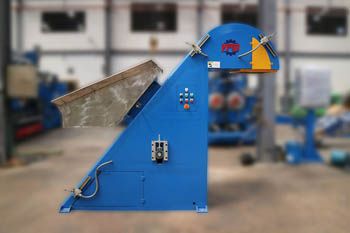
Advantages of using bucket elevators
As we all know, the bucket elevators play an important role in bulk material conveying technology. Bucket elevators offers space-saving and energy beneficial solutions for the conveying of bulk products They are often used at critical points in industrial processes and enable energy-efficient, dust-free and careful vertical transportation of large bulk material streams. We offer a variety of bucket elevator designs and sizes to handle materials ranging from dry dusty powders such as fly ash, to heavy materials such as iron or pellets. bucket conveyors are designed for vertical or high-lift conveying of large quantities of materials, they are widely used across various industries including glass, cement, biomass, power generation, and so on. The bucket conveyors are used for picking up various materials from the ground and elevating them to another place. Once the bucket reaches the point, it would discharge the content and then it returns to the initial place. The bucket elevators have low driving power,it give them an edge over other conveyor types. Bucket elevators can handle a variety of materials, it can be used in many different industries and application. There are three type of bucket conveyor ,including as follows: Centrifugal Bucket Elevators: These types of bucket elevators are used to move bulk materials. Continuous Bucket Elevators: These elevators are specially designed to handle materials which are fragile. Positive Discharge Bucket Elevators: These are similar to centrifugal bucket elevators, and are ideal for conveying food grade material. These bucket elevators are easy to use ,they are widely used in many industries ,such as Woodchips Aggregates Animal Feeds Minerals Fertilizers Lime
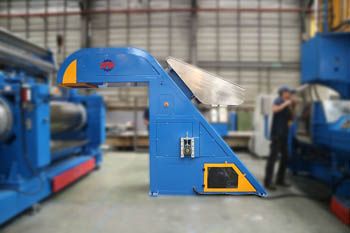
Why do you need Bucket Conveyor ?
A bucket conveyor is a mechanical devices and are found in factory settings, it can be used for tasks to transport products from one stage to another. Bucket Elevators is made of durable, sanitary stainless steel, these bucket conveyors These Bucket Elevators machines are capable of handling a large number of different products such as heavy, fragile, abrasive or light, it provide a sanitary, gentle, safe, they are designed for easy washdowns. A centrifugal bucket elevator employs centrifugal force to throw material out of the buckets as they travel over the head pulley or sprocket. This type of bucket elevator operates at a higher speed and utilizes buckets spaced further apart compared to continuous bucket elevators. Configurations for bucket elevators get engineered for different applications. Depending on the kind of material you want the conveyor to move, the horsepower it will take to run it, and how high the elevator will go determines which type of elevator to use. The options open to you are centrifugal bucket elevators, continuous or positive discharge types. Continuous Bucket Elevator best handles materials that are fluffy and light and should not be aerated. The Bucket Conveyor process works best for dry, dusty material. These machines will also work well for heavier, more challenging material such as those found in mining operations. It is not recommended that you use this system if your material is wet, sticky, or has a sludge consistency. The build up these materials can create discharge issues during your process. These Bucket Conveyor machines are great for dry, dusty materia ,they are capable of handling a large number of different products such as heavy, fragile, abrasive or light. if your material is wet, sticky, or has a sludge consistency. The bucket conveyor also work well for heavier, more challenging material such as those found in mining operations. There are three type cnveyorm , they are respectively centrifugal bucket elevator , continuous bucket elevators and positive discharge Bucket Elevator . However the size, moisture level, density and the type of material determine what kind of Bucket Conveyor you need to chose. Centrifugal Bucket Elevator works great with fine, granular material as it too fast for lumpy material. Continuous Bucket Elevators are a much gentler process. Continuous Bucket Elevator best handles materials that are fluffy and light and should not be aerated. This system allows for more material processing per rotation. Positive Discharge Bucket Elevator is a lot like the Centrifugal Bucket Elevator. This process works best on materials that will stick to the sides of the bucket and not allow them to discharge.
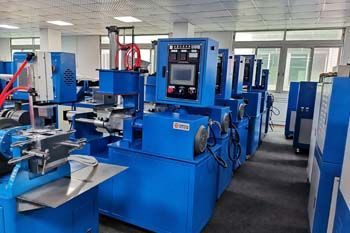
How Did The Kneading Machine Develop?
A kneader machine is equipment to knead and mix substances; it is widely used to process high viscosity materials, silicone, EVA, rubber, plastic, adhesive, BMC, CMC, ink, medicine, resin, etc. Before, people used open mill mixing to mix rubber, but as technology developed, it transformed into a hydraulic press kneading machine. Best Features Of Rubber Kneading Machinery Dispersion Kneading machines have become the most commonly used type of 'mixer' in the rubber industry due to their feature of highest quality mixing and minimum time. Efficient dust-proof systems and the latest technology have made the compounding room a matter of pride. Hydraulic rams and lid design make these kneading machines best for a high dispersion effect. Traditional Kneaders machines have two rotating rotors, which rotate at different speeds facilitated through connecting gears. The wings push your rubber material from one area to the other area of the chamber. The traditional kneader machine has a rotor shaft with two long, high, and narrow wings that are welded on the shaft. Traditional kneaders provide a cooling water system in the rotor shaft and small jackets in each wing. Frankly, this cooling method is not sufficient for single-pass mixing. Over time there has been a great change in the rotor aspect of machines, user can see better sign water cooling channels for better and quick mastication. For example, someone designed tri-blade rotors that mix with the highest quality dispersion effect, while its mixing time can reduce up to 15%. Usually, the kneading machine has a motor, pace reducer, couplings, transmission structure, electronic control systems, and balanced vacuum structure. Basically, the working principle between mixing mill and kneader is the same; when working, there is friction between two rotors (similar to rollers in roller mixing mills) to aid mixing. But the difference is that, for kneaders, this process happens in a closed environment. The Kneader machine features its special rotors(blades), mixing chamber, and pressure lid, which allow for thorough material flow and controlled shear mixing within the mixing chamber. It was designed initially for mixing thermoplastics; these Kneaders have become a very important machine for rubber factories and the elastomer industry. These Kneader Mixer are energy efficient, maintenance-friendly, labor and time-saving machinery; it offers the consistent quality of rubber mix compound at a higher output as compared to an open mixing mill.
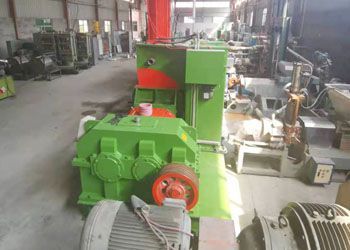
What Is Industry Rubber Kneader Machines Used For?
Kneader Machinery is a kind of rubber industrial mixer machinery which are for plasticating and mixing polymer materials under adjustable temperature and pressure. The Kneading machine is designed for mixing materials. The Kneading Machine is fabricated alloy steel, hard-faced, jacketed (longitudinal and transverse) for steam heating and water cooling, and tilt for easy discharge and cleaning. Rubber Kneader Machine is energy-efficient, maintenance-friendly, labor and time-saving machinery; this machine offers the consistent quality of rubber mix compound at higher output. The Rubber kneader and dispersing machine also applies to mixing and producing paint, dye, ceramic, medicine, tape and film, etc. It is widely used in the rubber and plastic industry, ranging from low viscosity to high viscosity adhesives, polymers, such as glaze, plastics, EVA and chemistry, etc. Rubber Kneader Machine is easy to operate; it ensures a uniform mixture of raw materials by controlling mixing and blending operations, easy color change cleaning, and simple operation. Most companies produce kneading machines with diverse features, including 35litre,55 liters,75 litres, 1101 liter, and even 15 liter, which is pretty amazing to serve the rising needs of the industry. The rubber produced or processed by a kneading machine is capable of being employed in Electric wires, wire covering, Conveyor Belts & Power transmission belts. And they are also compatible with all sorts of highly Technical applications such as rubberized rolls, gaskets, belts, automobile oil seals, shoe soles, body seals, hoses tubes, plugs, caps, gloves, etc.
What Is Bucket Elevator Conveyor?
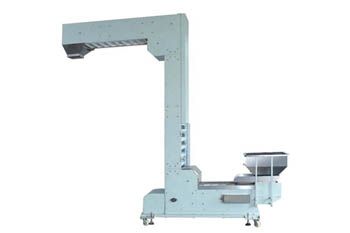
If you are looking for a machine that can move bulk materials vertically, you may consider needing a bucket conveyor. These bucket conveyor machines will grant you a more efficient process flow. Nearly every industry needs conveyors; it can elevate a variety of bulk materials from light to heavy and from fine to large lumps; it is a chain of buckets for raising liquids or materials to a higher level. The bucket elevator is used to convey bulk materials vertically; it is used from the first stages of production to the final packaging process. They are widely used to vertically convey powder bulk solids, such as grains, sugar, sand, minerals, etc. Bucket elevators move bulk material vertically; it may look like a conveyor belt. Bucket elevators transport material using buckets attached to a rotating belt or chain. These buckets conveyor pick up bulk material, fill with the material at the bottom, transport it to an endpoint and then discharge the material. The bucket elevators are made of durable, sanitary stainless steel; they are designed for easy washdowns. These bucket elevators are an energy and space-efficient way to transport products in large and small quantities. The bucket conveyor mainly comprises elevator buckets. Elevator Bolts, Elevator Belts, Belt Fasteners. Elevator chains, Elevator Drums. When working, the buckets remain in the carrying position until they are tipped to discharge the material. There are three elevator conveyors: Centrifugal conveyor, Continuous/ Gravity conveyor, and Positive conveyor. A Centrifugal conveyor is the most common type of elevator in the field that uses centrifugal force to discharge the product.
What is rubber granulator ?
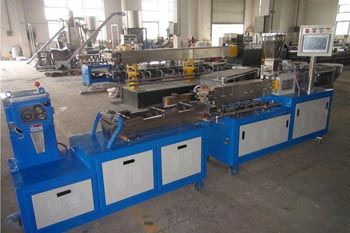
A rubber grinder granulator is specialized and designed for the rubber granulating process. It is used to make waste rubber powder for tire recycling. The rubber granules grinder machine is one fine rubber grinding machine widely used to grind natural rubber, synthetic rubber, granular materials, and plastic products into fine powder under normal temperature. The granulator or grinder machine is designed for grinding rubber from the rasper into small particles as fine as 1mm. The granules are screened and recirculated until the desired size is reached. Due to the design of the granulator, the granulator produces very uniform cut and high-quality pellets. Recycling rubber especially recycling scrap tires, can provide crumb rubber for a variety of applications. Rubber shredder and rubber granulator work together to produce great scrap rubber products into the uniform cut and high-quality granules. The rubber granules grinder machine comprises a grinder, pipes, cyclone separator, blower, control cabinet, and water cooling system. While the grinding part consists of a hopper, motor, transducer, grinding discs, adjusting device, water cooling system, and main frame. A rubber powder machine is suitable for a waste tire recycling plant, it is used to grind the rubber from the wire separator, and the processed item can reach up to 1 mm after pulverization. During the granulation process, 99% of the fibers are removed, which leaves very pure crumb rubber pellets ready for further processing or sale. These finished rubber items are mainly used in sports tracks, football fields, tennis courts, and other sports venues. They are applied in hospitals, hotels, restaurants, families, kindergartens, nursing homes, etc.