

Our Blogs
Our Blogs
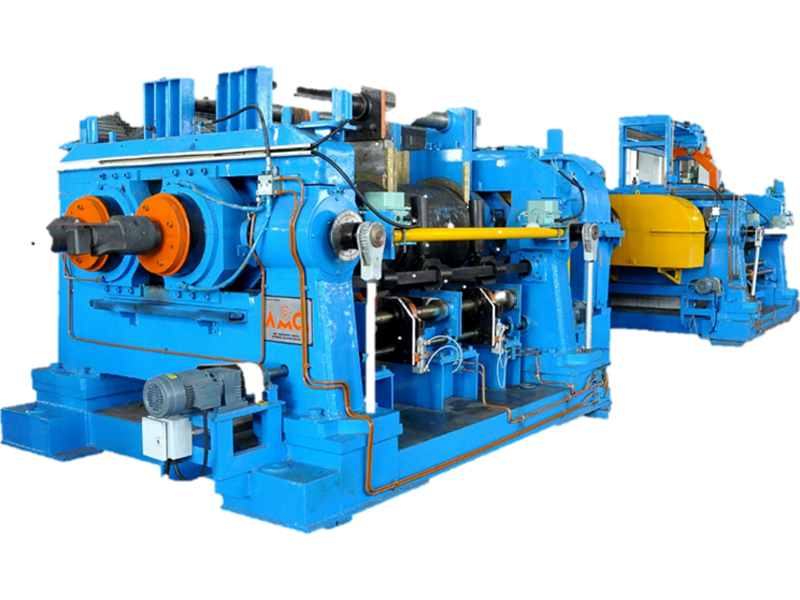
Particle Uniformity with roller mills
In the current scenario, wholesale dry solid processors urge more processing from their machinery. Some processors that use the equipment for decreasing size have particular requirements such as product features that should be improved, improved process efficiency, and less usage of energy. Two Roller equipment can provide the solution to all these demands for various series of pharmaceuticals, chemicals, minerals, food, and other different products. Mills are suitable for minimizing materials that are fragile or breakable, which is the material that does not flatten but will break under compression, In a process when a consistently sized particle is required with more minor fines. Think of a coffee grinder machine in a process where the primary objective is to achieve maximum uniform particles for more excellent management of finished particle characteristics as in a large solid size reducing applications. In the united states, coffee beans are crushed and processed to attain the maximum particle yield, which is between 1170 and 590 microns, with lesser fines (particles that are under 417 microns). In contrast, some beans are processed finer, relying on the concluding use. For example, coffee makers process coffee beans to 1170 microns for utilizing, 300 microns for espresso, and 100 microns for Turkish coffee. After the grinding stage, the coffee is directed to the packaging without being organized. This well-structured procedure requires accurate grinding consistency. If the grinding creates variances in the particle size of the coffee or fines, then the coffee is over-extracted at the preparing step. This over-extraction step maximizes the bitterness of the coffee, which is something that all coffee manufacturers want to reduce. Many alternative size reduction strategies do not allow you to skip the categorizing stage. Most applications require ground particles to be categorized for the final particles to meet tight size constraints. Furthermore, the fines eliminated during classification cost the producer money and energy because they must be discarded, reconditioned, or sold in a secondary market. The roller mill reduces such costs by precisely reducing input materials with an average particle size of up to 34 inches to a uniform average size of 100 to 2,000 microns. Roller Mill Components And Operation A roller mill comprises counter-rotating rolls of one to four pairs that are attached in a stiff frame horizontally, holding a feeding device placed on the top roll pair. Each pair has one roll that is placed in a fixed position, while others are allowed to move nearer or far from the fixed roll to accommodate the roll’s space, which is also called the roll gap. The size of the roll gap is based on the reduction of the desired particle size. How Does The Mill Work? In this process, the gravity-feeds material at a constant rate between the gap of the top pair of rolls. The feed material goes in the nip point where the opening between the rolls is the smallest. It is then crumbled into small particles as counter rolls rotate. If the mill has more than one roll pair, it will first crush it into smaller parts and then falls into the other nip point for further processing. How The Mill Achieves Uniform Particle Size? In order to attain a consistent particle size output with lesser fines, the roller mill, for your application, should contain a suitable roll surface, roll speed ratio, and roll gap. Roll Surface The roll surface is relatively crump as compared to being smooth to accomplish a reduction in adequate size. There are many corrugations in the variety available that is matchable to the hardness of the material and desired particle size output. Rolls, for example, can have longitudinal corrugations that run along the length of the roll or radial corrugations that run around the perimeter of the roll. Each corrugation can have several flutes (minor grooves) with varying sizes and profiles. To find out which corrugation is better for the application, the manufacturer will usually take roller mills tests in the testing facility for your material with different styles of roll corrugation and according to the circumstance similar to your operational environment. Roll Speed Ratio The rolls in each pair in most applications counter-rotate at various speeds. An HTD drive belt offers the motor powers both rolls and the speed discrepancy. Shear is applied to the material when it goes through the nip point when the rolls are operated at different speeds. The roll speed ratio is the difference in roll speeds between each pair (or roll speed differential). The roll speed ratio is 2:1 (1,000/500) if one roll rotates at 1,000 rpm and the other at 500 rpm. Less friable particles require more shear and a higher roll speed ratio. Running the rolls at the optimal roll speed ratio will produce the optimum shearing effect when the material goes through the rolls; the crushed particles will receive more tearing when the shear is much higher. As a consequence, the ratio of the roll speed has a more significant effect on the finished particle size supply, which relies on the friability of material and roll surface, and other characteristics. Roll Gap Proper controls of the roll gap are vital for achieving the desired particle size. This controller has two main components, i.e., roll alignment and the roll gap size. The mill operator can control size by narrowing or widening the roll gap. In most roller mills, the roller gap can be adjusted automatically through a PLC, programmed to match the specs of any product. This makes the gap adjustment process to be central seconds. It also allows faster changeovers between different grind settings and eliminates the need to shut down continuous operations. The rolls in pairs should be precisely the same as the roll length to achieve uniform size reduction. Testing the mill at the manufacturer's facility can help determine the ideal roll gap according to your size reduction requirements. Growing Markets For Uniformly Reduced Particles The two-roller machinery offers the distribution of a particle size ranging from 50 to 100 percent fewer fines than distributions formed by further attrition milling devices. This implies that no step of classifying is needed after roller mill reduction, and the mill makes less wastage in fines, minimizing discard requirements, reprocessing, or selling the wastage.
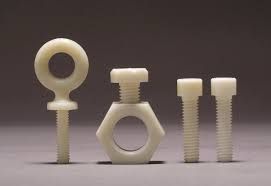
A Guide To Cryogenic Deflashing Equipment
A deflashing Equipment is also known as a deburring machine. This cryogenic deflashing has been in existence for approx. Fifty years and is still used by most the manufacturers. However, it has become popular in recent 15 years, and now every supplier opts for it. This process is done by using liquid nitrogen under high-speed rotation to remove the flash in the most practical and economical manner. Cryogenic Deflashing offers a modern method of removing burrs from parts shaped all through the molding process. This process eliminates flash via tumbling and exploding polycarbonate media under a cold atmosphere. Once the flash becomes brittle, it can be easily removed. There are three basic types of burrs, i.e., poison burr, roll-over burr, and tear burr; it solely depends upon the part and application required. Cryogenic deflashing equipment is divided into two types, i.e., basket and belt. The basket type is designed to process small parts along with 100% parts containment. The belt style is designed for heavier/ large parts since they require room space to tumble and stronger rotation. Cryogenic deflashing is appropriate for parts molded of different materials like polymers, plastics, rubbers, nylons, silicone rubber, neoprene, polyurethane, liquid crystal polymer, ABS, polycarbonate, EPDM, Delrin, acetal, and many others. Construction The cryogenic deflashing equipment is constructed with a stainless-steel cabinet and thick polyurethane foam. Inside of a cabinet consists of the blast chamber, throw wheel, and liquid nitrogen nozzle. After this, plastic shots are deployed, which range from 0.15 to 1.4 mm. These plastic parts make sure not to rush or part contamination. Routine maintenance can last any machine for several years and reduce part failure. Advantages Of Cryogenic Deflashing Equipment A cryogenic deflashing equipment provides various benefits when compared with manual deflashing methods, which are discussed below: •Greater productivity than traditional deflashing machines; cryogenic trims any part in seconds. •Best product quality produces the best possible quality and ensures part integrity. •Saves production time more than any other traditional method. •Cost-effective, produces lower price per piece. •Produces consistent/ accurate results from part to part. •Requires lesser maintenance than any other deflashing method. •Simplistic and fully automated makes it very easy to use. •Requires less labor since it is computer controlled. •Reduced product waste. •Improved temperature control. Cryogenic Deflashing Process Deflashed and deburred in a flash, the same process is used in the automotive, medical, and electronics industries. The cryogenic deflashing process offers a distinct way for companies to eliminate burrs from parts. A few short steps to do that is as follows: •Loading parts in the basket later loaded into the deflashing system. •Pumping gaseous nitrogen into the machine. •After achieving the required operating temperature, parts begin to tumble with one another. •After the cycle gets completed, it removes residual from the parts. •The basket is removed from the system, and the parts are allowed to dry. Most Cryogenically Deflashed Products In Day-To-Day Life •Gaskets and O-rings •Surgical tools •Medical implants •Electronic switches and connecters •Rubber washers or gears •Plastic fittings •Grommets •Valve blocks and manifolds Conclusion In this modern era, most molding applications are made via cryogenic deflashing instead of repairing the molds approaching their end life. It is always economical to add a few production costs for a part instead of investing in a new mold that costs hundreds and thousands of dollars. Thus, cryogenic deflashing is recognized as the most advanced technology to ensure high-quality parts with cutting-edge compounds and materials.
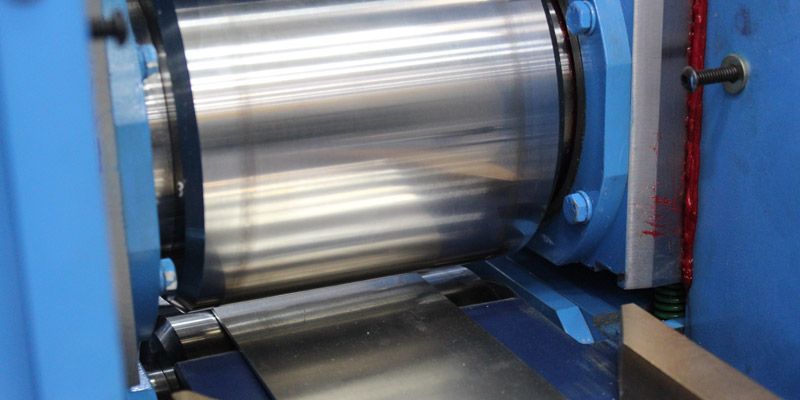
A Brief Informative Guide About Roller Mill
Here is a brief guide about roller mills that can provide an overview and understanding of this helpful product crisply and engagingly. This guide will walk you step by step to make understanding this product easy for the readers. What Are Roller Mills? Roller mills are the mills that use cylinder-shaped rollers, either in contrasting pairs or against flat plates, to grind or crush various materials, such as grain, ore, plastic, gravel and others. Roller Grain Mills Are A Substitute To Tradition These mills are used by numerous factories, large or small scale producers, usage depends upon the desired result. Roller mills for rock complement other types of mills, such as hammer mills or ball mills, in such industries as the mining and processing of ore and construction aggregate; cement milling and recycling. How Does Roller Mill Work? Roller milling is the procedure for producing flour. it is a method which is used to separate the grain kernels materials like germ, the bran, and endosperm, afterward, crush them into fine flour grain. Investing in the right roller mill is substantial in long run of any business model since it is one of the key factor to attain the correct product result as well as it also decides what the operating cost or the selling cost of the particular product would be. In this article, we’ll try to cover what key things should a producer (no matter small or big) considerate while going for a plant. Types Of Roller Mills Two-roller mills are the effortless and uncomplicated process in which the material is compressed between two rollers before it reaches its final end point. The positioning between the two rollers can be accustomed by the worker. Thinner spacing between the rollers leads to crushing of material into smaller pieces. Four-Roller Mills Four roller mills have basically two sets of rollers. By using four roller mill, the grain first goes over rollers with an extensive opening, which splits the seed from the husk causing it no damage, but leaves large gravels. Flour is then filtered out of the cracked grain, and then the rough grist and husks are directed over the second set of rollers, which again crush the grist without any damage to the crust. In the same way, there is another type which is three-roller mills, where one of the rollers is used multiple times. Five-And Six-Roller Mills There are three sets of rollers in six-roller mills. When we use this kind of mill on grain, the whole kernel is crushed by the first set of rollers, and the output is divided in three methods: flour is directly sent out the mill, grits not having a husk is progressed to last roller, and the husk which might have some parts of the seed, proceed to the second set of the rollers. Flour is the output, directly from the second roller, as any possible seed is there or husks, and the husk free of grits are directed into last roller. What Is A Rolling Mill Used For? Rolling mills basically are the tools which are equipped with steel rollers which can feed the metal through to specifically to change the thickness or the shape or to commence complex textures. Why Roller Mill Capacity And Size Matter? It is essential for any business no matter it is of big/ commercial size or small farming extent. Of course, for the desired and ultimate result it is crucial to choose the right size and capacity of any machinery and same goes with roller mill. The right size is vital for feed processing in for any agricultural industry to get the desired output. An automatic roller mill provides accurate grain processing and of course, reduces over-treatment and waste of your grain thus it is very important to completely understand regarding roller mills to invest in the right machine. When the feed gets over processed it often results in soft grains which is a waste of feed and money. This could be harmful to the environment and to the labor involved. To create uniform kernels, parallel rolls are used. This also helps animals to correctly digest their food resulting in gaining some extra pounds for your animal health. The gap between the rolls can be adjusted according to the feed size, capacity and goal. Goal size usually ranges between 100 to 2mm microns, likewise, different types have different possibilities and diverse methods. Whether you operate a small operation or a large scale farm, nobody wants to waste time and effort. There are roller mills that can produce 10,0000 to 12,000 bushels per hour. Almost every modern roller mill now features self-cleaning technology which saves time. Choosing the exact model according to the size and capacity for your farming needs to enjoy precision grain processing. Your farming mill is an important factor in achieving your business goals.
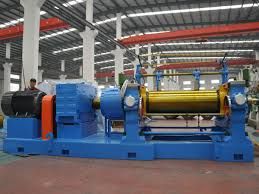
Things You Should Know About Calender Machine
In the modern industry, we get to see an increased use of calendar machines as they are widely used in the finishing of textile fabrics and when I come to the production of vinyl plastic sheeting. For coating the materials and manufacturing of paper, the rubber sheeting shows that a calender machine plays an essential part in it. However, these mechanized plain calenders might seem like a new invention. Still, in reality, they were there for quite a long time as they had been quite famous in the middle of the 18th century as it was seen to be used very commonly after they were introduced in England in the 17tth century from Flanders. Two other types of calendars were specially made for embossing and moiréing and various other uses; these were the friction calendar made by William Smith and the Schreiner Calender patented in 1895. These types of calendars have been made in various forms. They usually range from two roll mixing mill machines to twelve heavy roll rubber mills machinery, mostly mounted vertically over a solid frame in the series pattern. The critical factors over which the machine works are temperature and pressure applied when the material is processed between the rollers. The arrangement of the rollers, their type and their quantity are the factors that are highly useful in determining how the calender would function. In finishing broad-woven fabrics, the results that the calendering would produce are that of ironing the clothes. As the pressure closes the threads and eliminates the creases and flattens to the desired thickness, adding smoothness and some special effects in the form of shine and lustre over the clothes. Calendering Is The Industry Of Plastic However, in the plastic industry, calendering is a method that is being widely used to produce vinyl sheets and plastics. All the ingredients combined along with the resin are blended into a form of a big, hot mass plastic which is passed through the hot rollers that exert the effect of temperature and pressure over. The uniform and even thickness is achieved by the gap on the rollers of the calendar. It is used for the same type of applications in the production of coated fabric and the production of rubber sheeting. Calendering Is The Industry Of Textile When It comes to calendering in textile, the main factors that are the working principles of these calendaring machines, temperature, force, and moisture, are considered the most critical factors. Achieved by passing the textile substrate between the two heated drums or the rollers vertically attached to a strong frame. However, the speed of rotation, pressure and temperature varies according to the need. •As the result of the process, there is an effect over the fabric that seems like an effect of ironing which not only makes the fabric crease free but provides a lot more benefits like: •They also provide special effects making the fabric surface look highly lustrous. •They also add a smooth, glossy and silky touch to the fabric's surface. •It adds on to increase the fabric cover factor. •It can cause a reduction in thickness according to the need, as it Compresses the fabric. •It can lead to a closing of the threads as it flattens them, which tends to fill up the inter gaps that are left between warp and weft. •It also reduces the permeability of air as it changes prosperity. •It also enhances the opacity of the fabric. •It helps in reducing the yarn slippage. •Calendering also helps flatten the slabs. •It helps in the Consolidation of non-woven material. Different Types Of Calenders Calendering is considered an essential process because of its role in textile finishing and giving the surface of the fabric a whole new look. However, various types of calendering exist depending upon the number of rolls present and various other factors. Some common types are: •Swizzing calender •Chasing calender •Compaction calender •Embossing calender •Friction calender •Schreiner calender
Reality Of Rubber Reversion
We all know why rubber dry rots when the rubber starts rotting as such that it becomes cracked all around. Do you know why rubber dry rots happen? Extreme environmental conditions like high temperatures and UV radiations are what lead a bouncy rubber to become dry rot. Why are we discussing rubber dry rots in this article? That’s because rubber dry rots and rubber reversion are somewhat the same. Just like rubber dry rots, rubber reversion also happens as a result of extreme environmental conditions. However, the reversion of rubber is interesting to understand why is it called reversion of rubber and not melting of rubber. This mystery will become clear to you once you get to the end of this article, so read it till the end. Understanding Rubber Reversion Rubber isn’t a natural product but is synthesized by using raw material, which is obtained from a natural source and is then processed through a chemical process to achieve its final state as a rubber. The raw material for synthesizing rubber is obtained from trees; a syrup almost similar to the consistency of maple syrup is collected from trees and is very sticky. This is also called natural rubber; this then goes through a process called vulcanization, in which this natural rubber is blended with sulfur atoms and other curatives and accelerators. These additives are added to the natural rubber to enhance its elasticity for changing temperatures. Three-dimensional cross-links are formed between each polymer chain of natural rubber for adding additives into the natural rubber. That’s how one gets a rubber that is not sticky and bounces perfectly. Therefore, reversion of rubber is basically the reversal of synthetic rubber to its natural state by extreme environmental conditions. Rubber Reversion Isn’t A Bad Thing Rubber reversion is considered to be a bad thing, but the reality is that it is a very good thing for the safety of the environment. Anything that cannot be recycled is not environmentally friendly, and since the world has already been damaged by humans so much, the only solution now is to make things that can be recycled. Recycling of products also requires running the products through a recycling process, but with rubber, the recycling happens naturally. Rubber reversion is a natural recycling process of rubber that reverses the rubber back to its original state. This rubber doesn’t go to waste as it can be vulcanized again. Rubber reversion and then re-vulcanizing this rubber doesn’t even make the final rubber any less. It can be used for making anything like tires, mousepads, construction materials, and anything. Preventing Early Rubber Reversion Synthetic rubber has a life span, and after that, it will reverse naturally, but obviously, no one wants its rubber product to reverse just after using it for one day. Rubber reversion is good, but only when it happens at its specified time; early rubber reversion isn’t a good sign. For this reason, stabilizers are added to the natural rubber during vulcanization as they help prevent the risk of early rubber reversion. However, if a rubber reverses to its original state earlier to a great extent, then comparative analysis of that rubber can help reveal the polymer that it was made of and its lost cross-link density. This analysis will help the manufacturers of synthetic rubber to understand their product even better and improve it by slightly altering their rubber formula according to the need. Thereby, the product they will achieve will then fulfill its set expectations and won’t reverse before its time. So, what did you learn? Rubber isn’t always bouncy; it can be sticky sometimes which can not go in any milling machine , that is why rubber reversal is of more good than bad for us.
How To Choose The Best Rubber Solution
Having a variety among the options is a blessing but at the same time, it could be a problem too. On one and where having options can bring in options in your selection, while on the other hand, having a lot of options can also confuse a person, leaving them behind in a confusion that which option they should go for or even if they come up with an option, they end up not being sure about it. This is the case with every product that you go around to buy. This problem does not only carry on with the daily routine things that you come across to buy but this problem also happens when considering small unusual essentials that you might need. For instance, the selection of a rubber solution. This might seem like a simple task of selecting a rubber solution with the right rubber mixing equipment but, it is not as simple as it seems to be. But, selecting the right rubber solution for your application can be a challenging task a variety of rubber solutions makes it a little difficult to select among the different options that are available. Before one decides to buy the best rubber, solution there are various things that they should know very well about the rubber solutions. Rubber solution is simply a mixture of solid rubber that is dissolved in a volatile solvent most of the time acetone, hexane, heptane, or toluene, mixing them and making it in form of a mixture. When this mixture is applied to an object, the volatile liquid usually evaporates. Leaving the rubber base behind, that rubber base acts as the adhesive. To make a rubber solution any sort of rubber can be used whether it is vulcanized or not these could be natural rubbers, gum mastic, or gum Arabic. While making, a small percentage of alcohol is often added to the mixture too. All the compositions serve a different purpose, for instance: 1. Natural Rubber As suggested by the name, this product is made up of natural rubber. Latex and dry, both are thermosets, which means that they are irreversibly preserved and are meant to be molded together into a final form of a solution. As natural rubber is capable enough to tolerate wide ranges of temperatures and it also has high abrasion resistance. Natural Rubber can also be used for various other purposes too. It is a renewable source of material serving various purposes, as it is suitable for food contact and for various other medical applications. 2. Synthetic Rubber synthetic rubber has properties that are very much similar to that of natural rubber. The products made from synthetic rubber are thermosets and can tolerate a wide temperature use range, they also have high scratch resistance. Just like natural rubber the synthetic rubber also serves a lot of purposes and is used in various applications. Just like natural rubber, synthetic rubber is also a petrochemical material source that is suitable for food contact and medical applications. But one can also use it as an alternative to latex as while synthetic rubber is a non-latex rubber product, it is the choice material when latex allergies are a concern. 3. Thermoplastic Non-Latex Elastomeric rubber possesses many of the properties of natural rubber but it is different when the advantages and applications are concerned. It is considered beneficial in the case of various medical applications. One of the major advantages of the products made from thermoplastic material is that its recyclable and designs can be adjustable. Just like synthetic rubber, thermoplastic is also made up of a petrochemical material source. Its other properties include its ability of chemical resistances that differentiate it from natural rubber. Some grades of its quality are more weather and ozone resistant than natural rubber.